
Rough Pool Surface
Worn or deteriorated plaster can become uncomfortable on hands and feet and may snag swimsuits or pool-cleaning equipment.
Blue Wing Pool Service provides professional pool plastering and pool replastering for rough, stained, pitted, flaking, cracked, worn, or deteriorated swimming pool interiors.
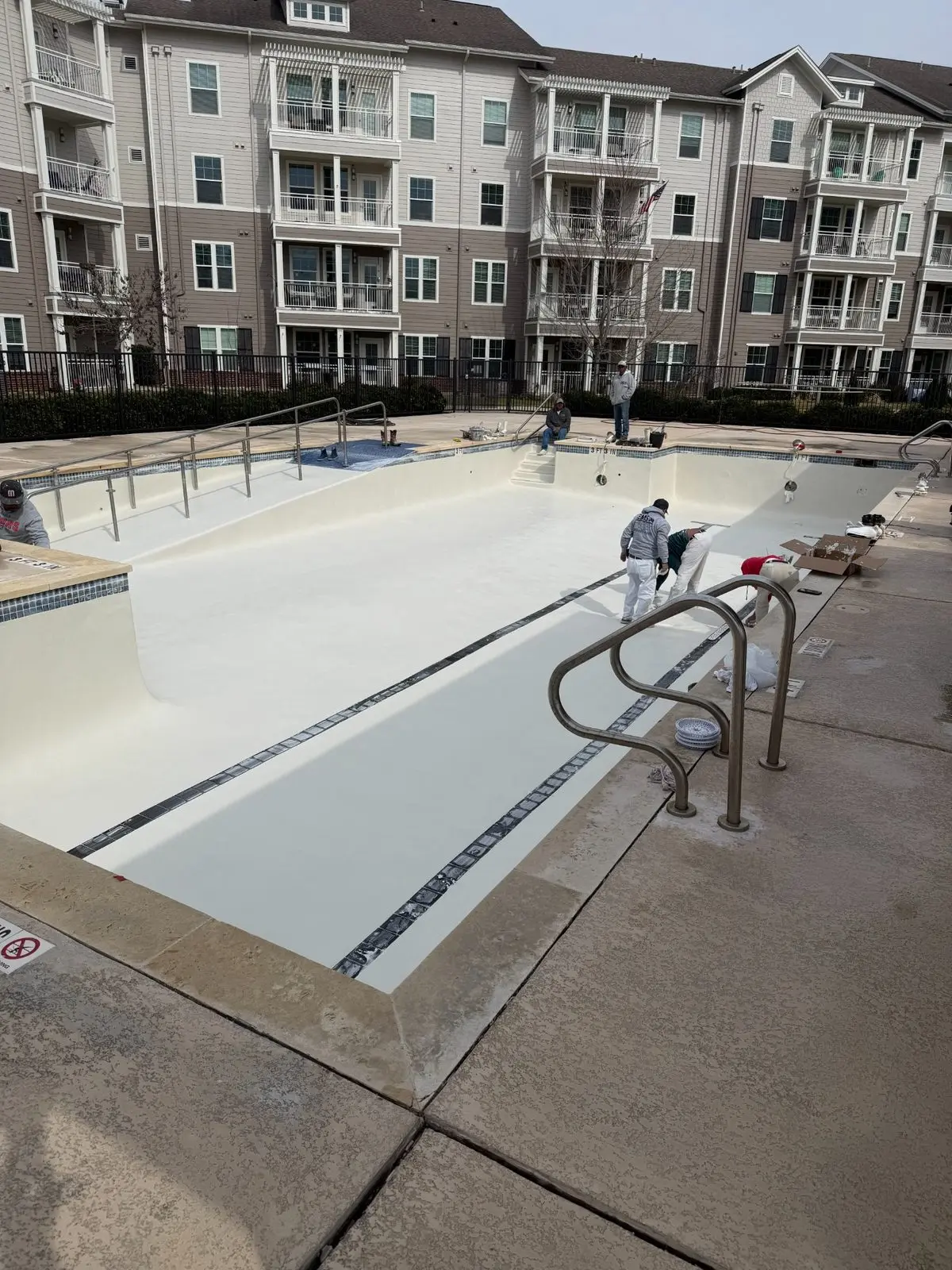
Pool replastering is the process of removing or preparing an aging swimming pool interior and applying a new plaster or surface finish. It is commonly performed when the existing finish has become rough, stained, pitted, flaking, worn, or visibly deteriorated.
Pool plaster is more than a decorative finish. It provides the interior surface swimmers touch and serves as a protective layer over the underlying pool structure. The correct preparation and installation process is important to the appearance and performance of the finished pool.
Not every stain or crack means the entire pool must be replastered. The age, condition, severity, and extent of the surface problem should be evaluated.
Worn or deteriorated plaster can become uncomfortable on hands and feet and may snag swimsuits or pool-cleaning equipment.
Metal, mineral, organic, chemical, and age-related staining can become embedded in an older pool finish.
Chemical imbalance, age, and deterioration can leave the plaster uneven, porous, or visibly etched.
Cracking should be evaluated to determine whether it is limited to the finish or involves a deeper pool problem.
Sections of plaster may loosen, chip, flake, or separate from the underlying surface.
Even without one major defect, an older surface may show general wear, discoloration, and reduced finish quality.
The exact process depends on the existing pool finish, surface condition, repairs, chosen material, weather, and preparation requirements.
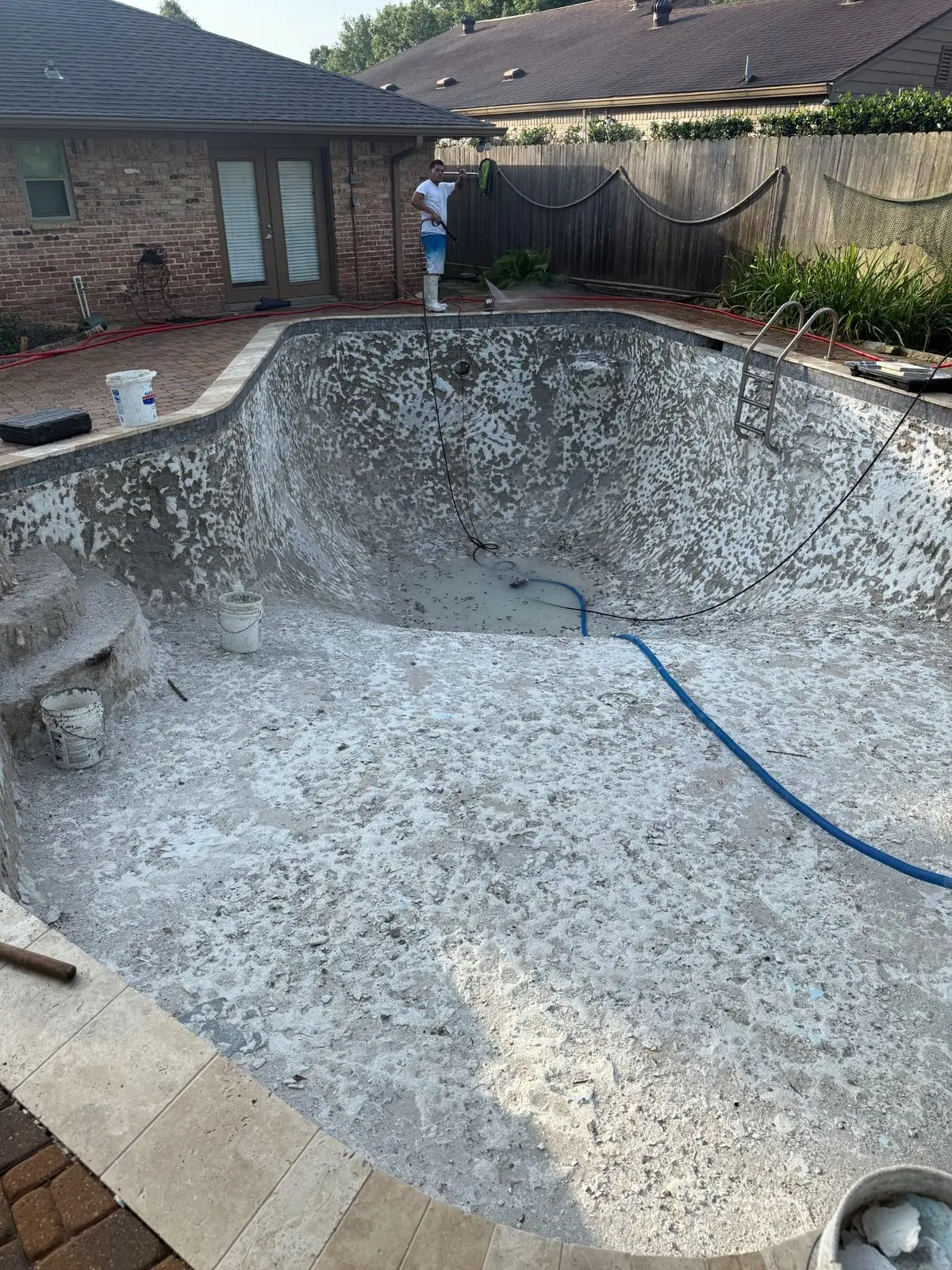
Replastering is more than applying a new finish. The pool must be drained, the existing surface evaluated, loose or damaged material removed, repairs completed, the interior prepared, and the new finish applied under the correct conditions.


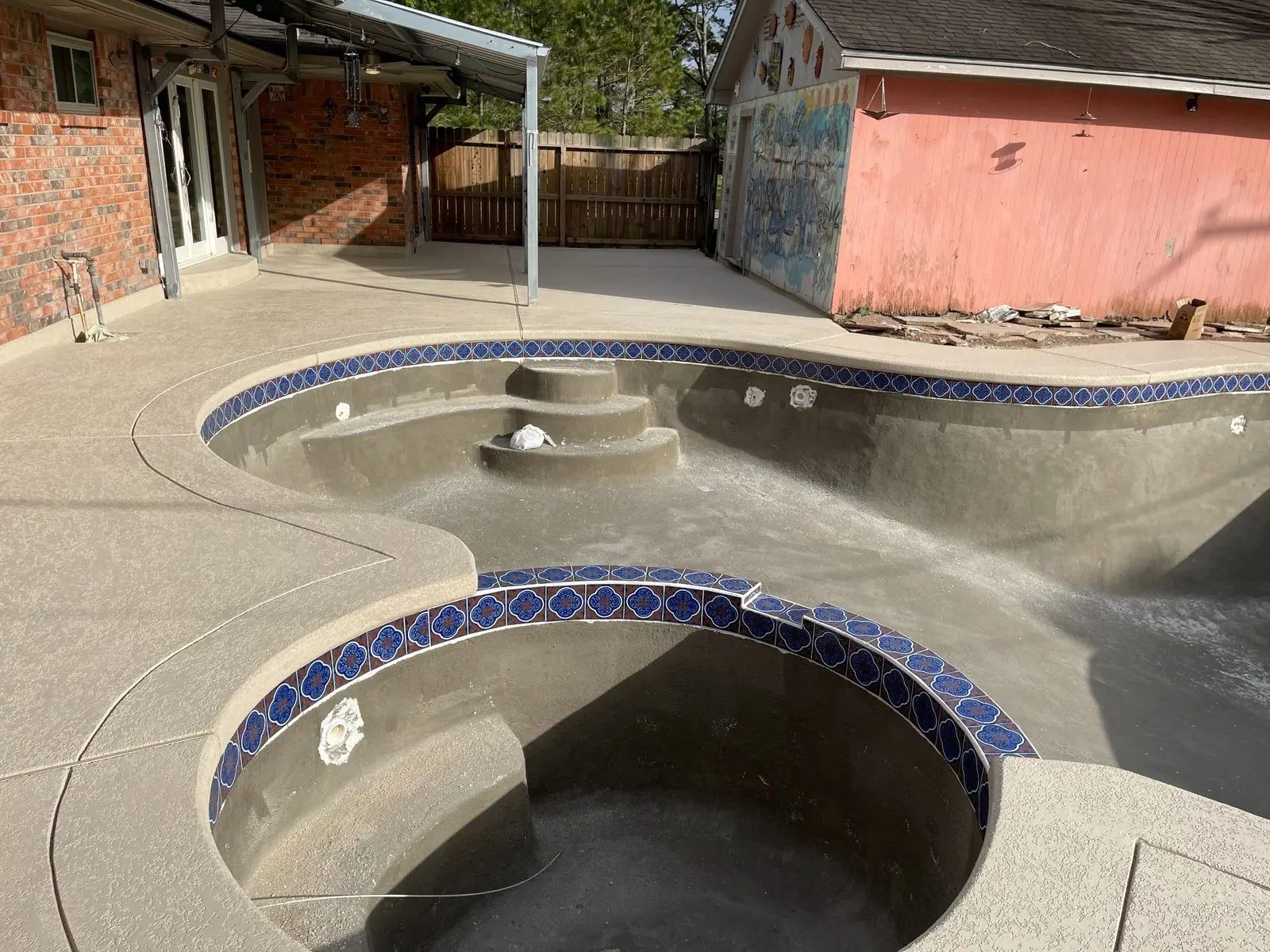

Every pool interior is different. The existing finish, age, condition, prior coatings, cracks, staining, tile, fittings, access, and selected material all influence the work required.
Loose, hollow, flaking, painted, or deteriorated surfaces may require additional removal or preparation before resurfacing.
Surface cracks and deeper movement should be evaluated before they are covered by a new interior finish.
Waterline tile, return fittings, drains, lights, and pool edges may need repair or replacement during the renovation.
Finish selection may affect appearance, texture, color, maintenance expectations, and overall project cost.
Temperature, rain, wind, and jobsite conditions can influence scheduling and installation.
The pool should be refilled and started according to the needs of the new finish to support proper curing and appearance.
Replastering does not end when the finish is applied. The refill and startup period is important because the new surface is still curing and interacting with the pool water.
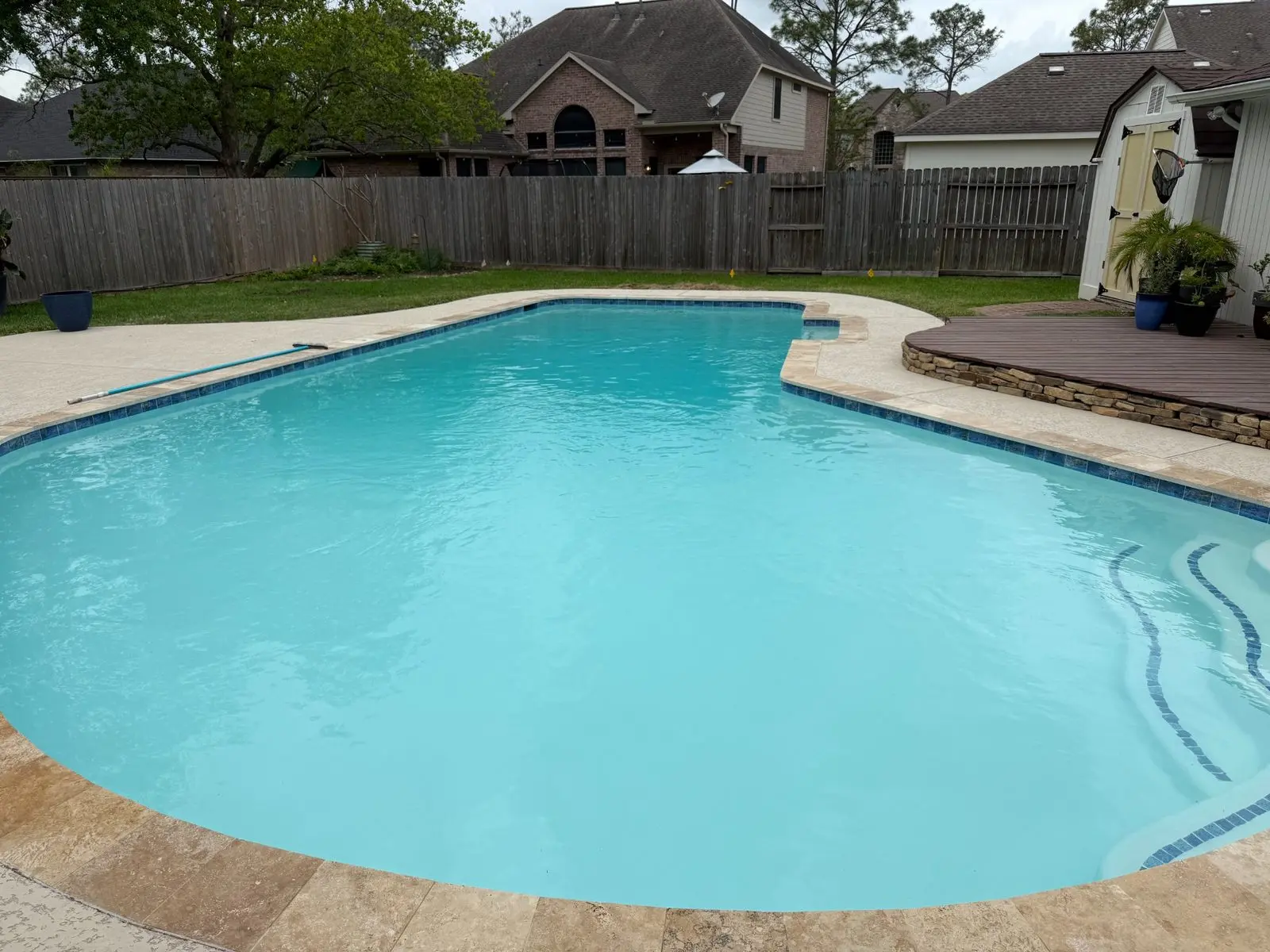
Replastering can improve more than appearance. A properly prepared new interior can restore a smoother, cleaner, and more consistent swimming surface.
Replace rough, pitted, or deteriorated plaster with a renewed swimming pool interior.
Refresh discoloration, widespread staining, worn finishes, and an outdated pool interior.
New plaster provides a renewed interior finish over the properly prepared pool structure.
Replastering can be part of a larger renovation involving tile, coping, fittings, cleaning, or repair work.
Some surface problems may be improved through cleaning, while cracks, leaks, fittings, or structural concerns may require additional repair.
Blue Wing Pool Service provides pool plastering, pool replastering, and swimming pool resurfacing throughout Clear Lake and surrounding Bay Area communities. Select your area for local service information as those pages are added.
Pool plastering may refer to installing a plaster finish on a pool, while pool replastering generally refers to replacing an existing worn or deteriorated plaster surface with a new finish.
Common signs include widespread roughness, pitting, flaking, discoloration, embedded staining, visible deterioration, and an aging finish that no longer performs or looks acceptable.
Some stains can be improved through cleaning or treatment. Results depend on the stain source, depth, pool surface, age, and condition. Deep staining or deteriorated plaster may require resurfacing.
Yes. Pool replastering requires the water to be removed so the existing interior can be prepared, repaired, and covered with the new finish.
Some cracks and surface problems may be addressed during preparation, but the cause and depth of the cracking should be evaluated. Structural problems may require additional repair.
The pool is refilled and a startup process begins. New plaster requires appropriate filling, brushing, circulation, chemical balancing, and follow-up care according to the selected finish.
Contact Blue Wing Pool Service to discuss pool plastering, pool replastering, swimming pool resurfacing, surface preparation, and related pool restoration work.