
Falling Water Level
The swimming pool repeatedly drops below its normal operating level and requires frequent refilling.
Blue Wing Pool Service provides professional swimming pool leak detection for homeowners experiencing unexplained water loss, wet areas, recurring chemical problems, or a pool that must constantly be refilled.

Pool leak detection is the process of investigating unexplained swimming pool water loss and narrowing down where the water may be escaping. A leak can involve pool plumbing, fittings, skimmers, returns, lights, equipment, cracks, or the swimming pool structure itself.
Finding the source before beginning repairs can reduce unnecessary work and help ensure the actual problem is being addressed.
One symptom alone does not always confirm a swimming pool leak, but repeated or unexplained symptoms should be investigated.
The swimming pool repeatedly drops below its normal operating level and requires frequent refilling.
Increased water use may occur when a leaking pool is constantly topped off to maintain the proper level.
Persistently damp soil, soft ground, or unexplained moisture near the pool may be related to escaping water.
Ongoing water replacement can dilute chemicals and make the swimming pool more difficult to balance.
Air bubbles, circulation issues, or loss of prime may point toward certain plumbing or equipment problems.
Cracks, damaged fittings, loose components, or deteriorated pool surfaces may deserve closer inspection.
Every swimming pool and water-loss problem is different. The process begins with the symptoms you have noticed and then focuses on the areas most likely to be involved.

Pool water can escape from several different systems or components. The repair depends on the actual leak location, which is why diagnosis should come before repair work.
Underground suction and return plumbing can develop leaks from movement, age, damage, or failed connections.
Leaks may develop around fittings, seals, connections, or surrounding pool material.
Light niches, conduit areas, and seals can sometimes become sources of swimming pool water loss.
Drain fittings, hydrostatic components, and nearby surfaces may require investigation.
Pumps, filters, valves, heaters, chlorinators, and connected plumbing can leak while the system is operating.
Structural movement, deterioration, and damaged interior surfaces may allow water to escape.
Spas, waterfalls, raised walls, fountains, and connected plumbing can have separate leak sources.
Cracks or separation near the waterline may contribute to water loss in some pools.
A swimming pool leak may begin at a cracked PVC fitting, damaged skimmer connection, underground return line, equipment connection, coping joint, or another concealed location. These Blue Wing project photos show why accurate diagnosis matters before concrete, soil, or pool finishes are opened.


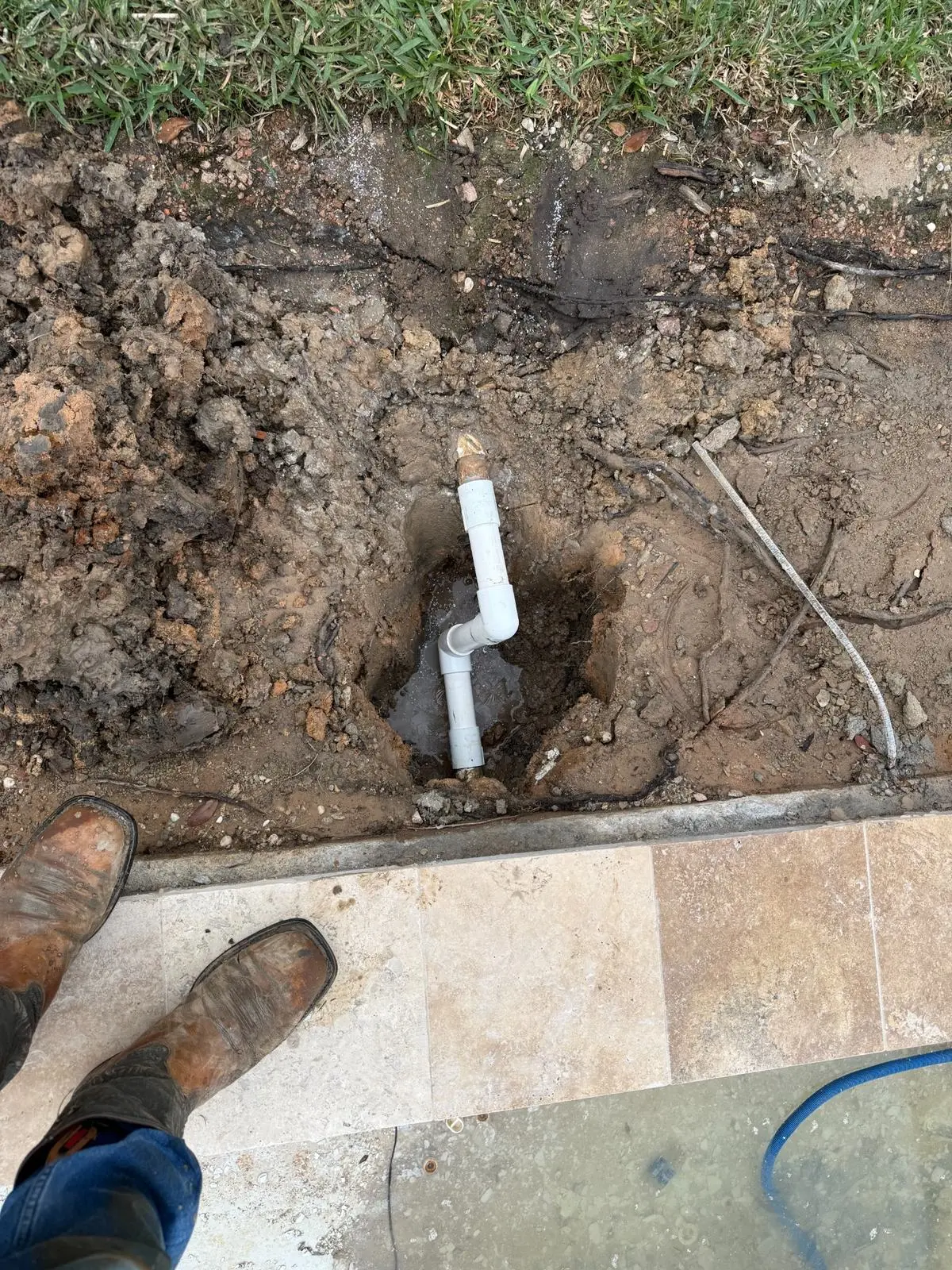
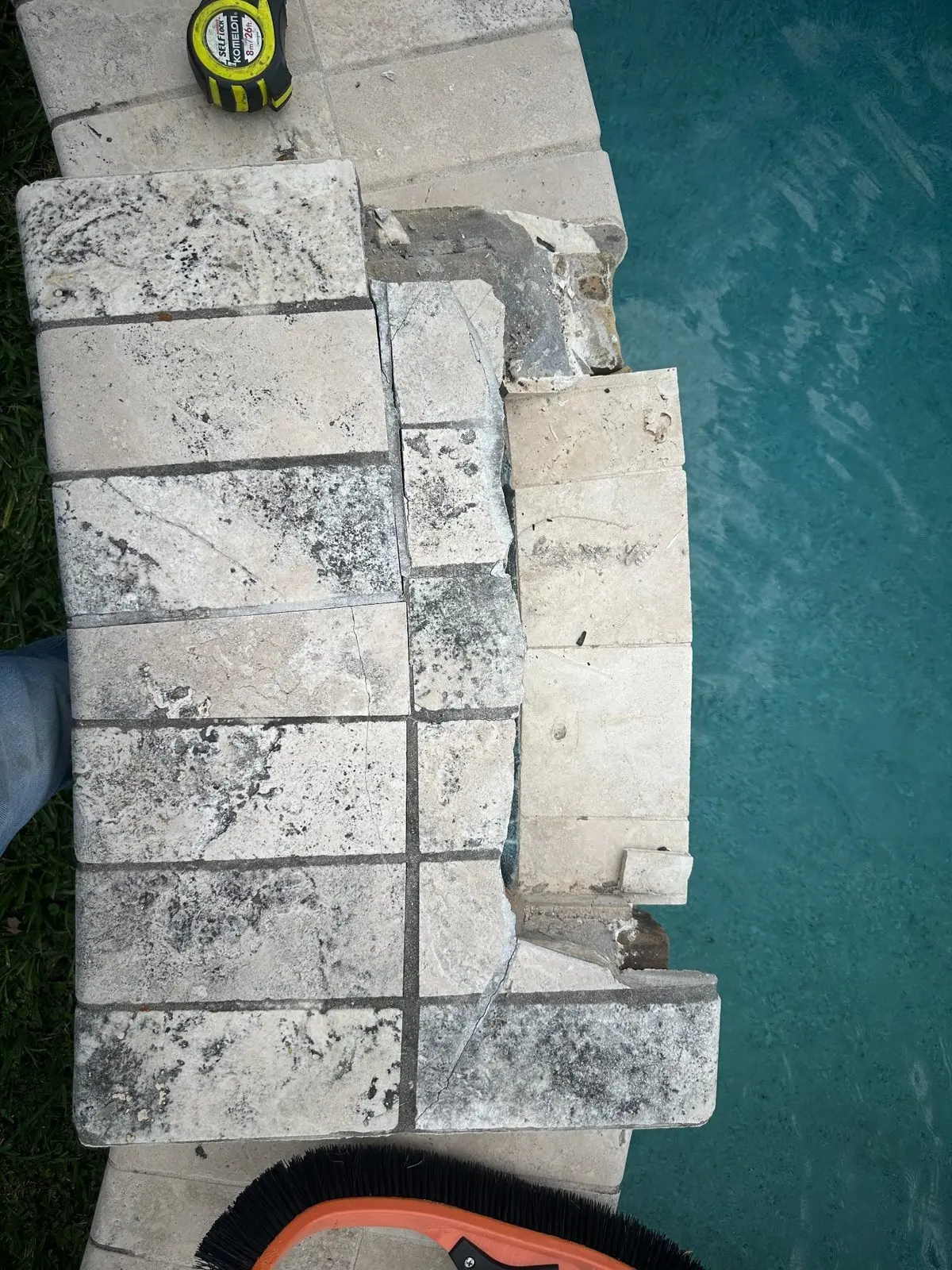
Underground suction, return, spa, and feature lines may fail because of movement, age, impact, or damaged fittings.
The skimmer body, throat, plumbing connection, or surrounding pool material can become a source of water loss.
Pumps, filters, valves, heaters, unions, drain plugs, and connected plumbing may leak only while the system operates.
Cracks, fittings, lights, water features, tile lines, and deteriorated surfaces may also require testing.
Leak detection identifies or narrows down the problem. Pool leak repair addresses the affected component or area after the source has been found.
Blue Wing Pool Service provides swimming pool leak detection throughout Clear Lake and surrounding Bay Area communities. Select your area to view local service information.
Evaporation changes with temperature, wind, humidity, sunlight, water temperature, pool use, and whether the pool is covered. Water loss that remains excessive or consistent despite changing conditions may indicate a swimming pool leak.
There is no single amount that applies to every pool. Weather, pool size, exposure, water temperature, and use all affect evaporation. A noticeable or repeated drop beyond normal conditions should be investigated.
Yes. Swimming pool plumbing lines often run underground, and a leak may not always create an obvious wet spot at the surface.
Yes. Pumps, filters, valves, heaters, chlorinators, connected plumbing, and waste lines can sometimes leak while the equipment is operating.
Leak detection and leak repair are separate parts of the process. Detection identifies or narrows down the source. The repair depends on the affected component, location, and type of damage.
Note how quickly the water level is dropping, look for visible moisture or equipment leaks, and contact Blue Wing Pool Service at 281-904-4208 to discuss pool leak detection in Clear Lake or the surrounding area.
Contact Blue Wing Pool Service for professional pool leak detection in Clear Lake, Texas and surrounding Bay Area communities.